Space Fundamentals | Understanding Space Exploration and Technology
Space Fundamentals
Understanding the Foundations of Space Exploration
Space exploration represents one of humanity's greatest scientific and engineering achievements. From the first satellites orbiting Earth to future plans for permanent settlements on the Moon and Mars, our understanding of space continues to expand at an unprecedented pace.
Space Fundamentals provides an introduction to the key concepts, technologies, and destinations that shape modern space exploration. Whether you are a student, researcher, engineer, or simply curious about the future beyond Earth, understanding these fundamentals is the first step toward exploring the rapidly evolving space sector.
Why Space Exploration Matters
Space exploration drives innovation, expands scientific knowledge, and helps humanity address some of its most complex challenges. Technologies originally developed for space missions have contributed to advancements in communication, navigation, medicine, materials science, and environmental monitoring.
Beyond technological benefits, space exploration helps us understand our place in the universe while preparing humanity for future opportunities beyond Earth.
The Moon: Humanity's Next Destination
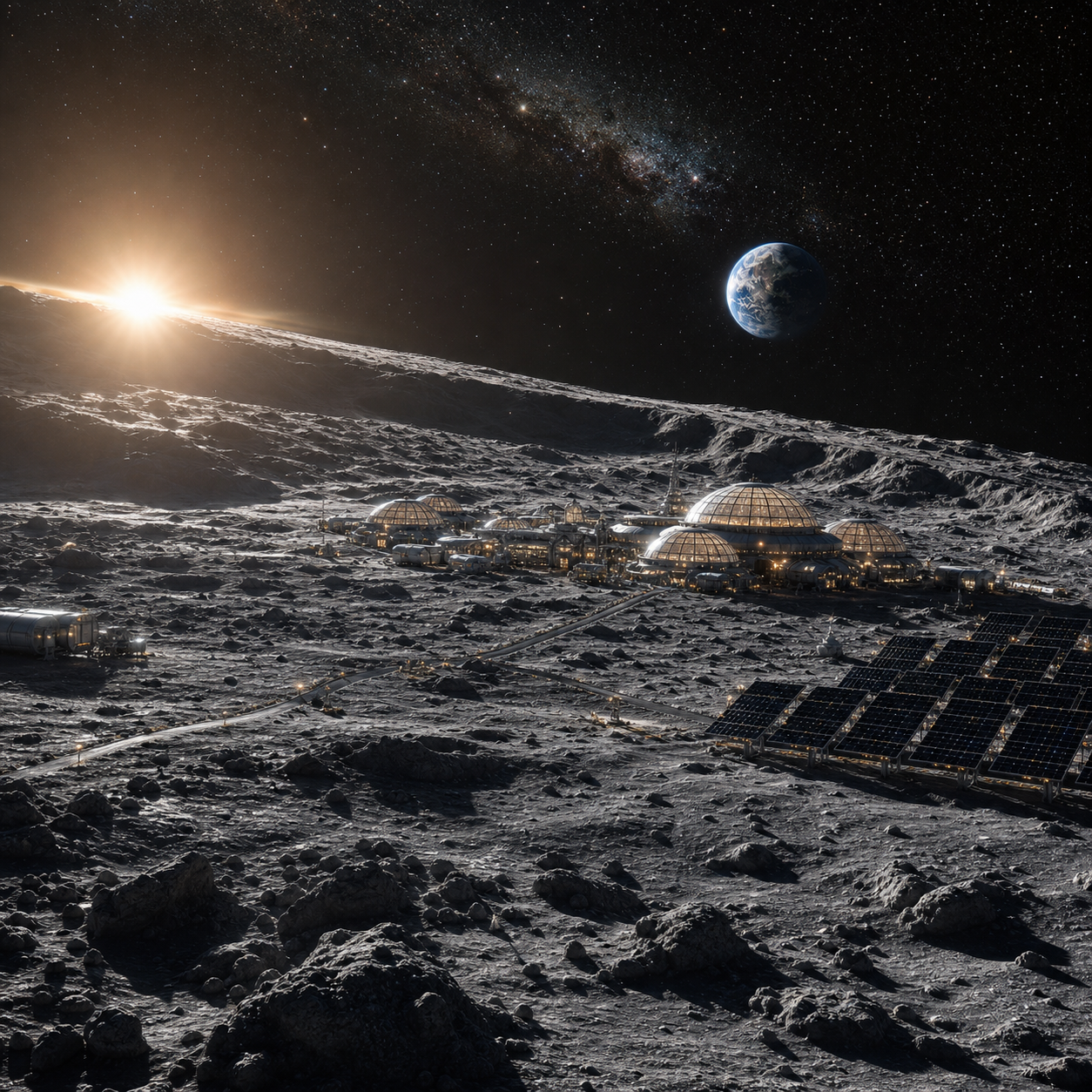
The Moon is expected to become the first location for long-term human presence beyond Earth. International programs such as Artemis aim to establish sustainable
lunar operations that will support scientific research, technology development, and future deep-space missions.
The
lunar environment presents unique engineering challenges, including extreme temperatures, radiation exposure, and the need to build infrastructure using local resources.
Learn more:
Mars: The Frontier of Human Settlement
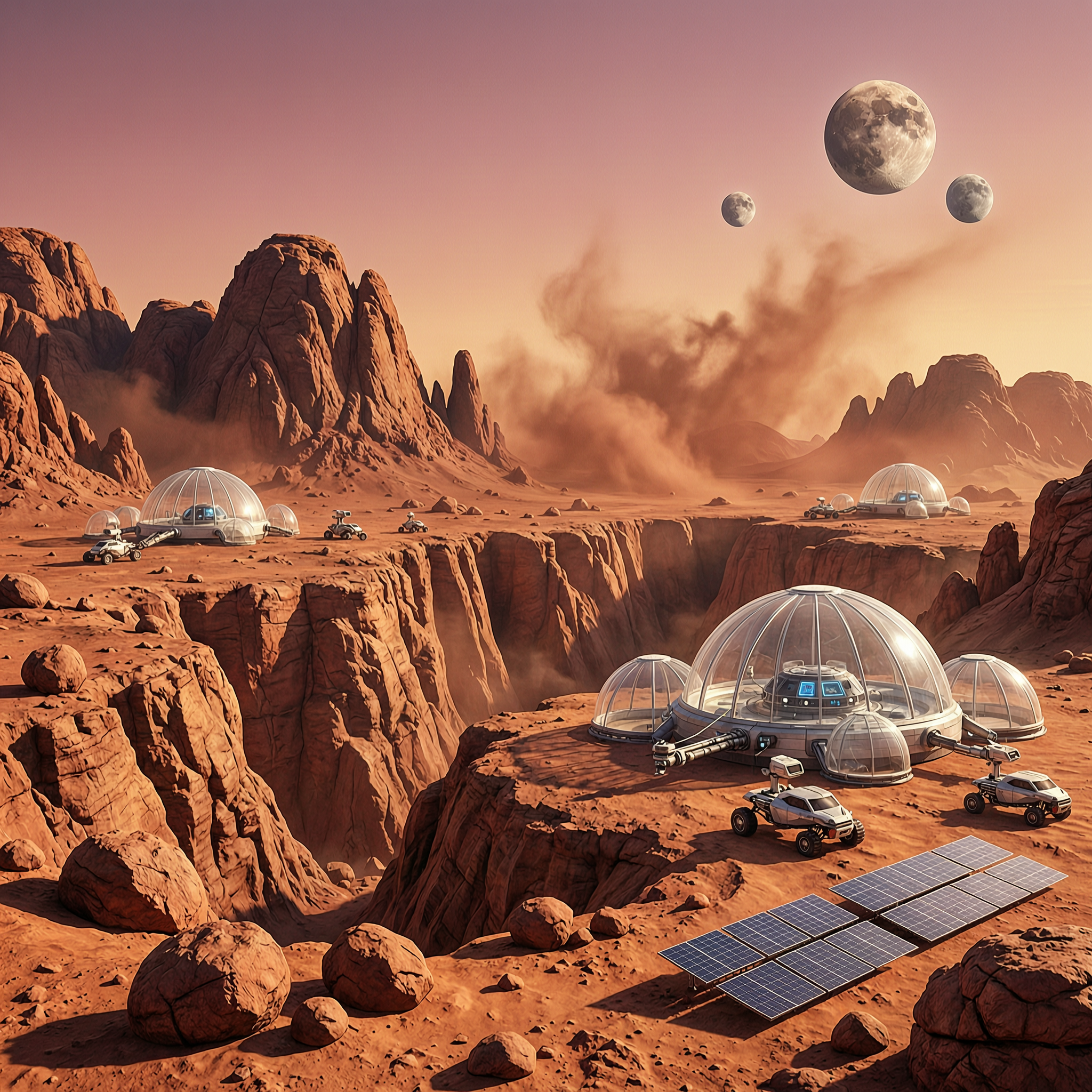
Mars remains the primary long-term target for human settlement beyond Earth. Scientists and engineers are developing technologies that may one day enable humans to live and work on the Red Planet.
Future
Martian settlements will require advanced solutions for construction, transportation, energy production, resource utilization, and environmental protection.
Learn more:
Key Technologies Enabling Space Exploration
Modern space exploration depends on a wide range of technologies, including:
-
Launch vehicles and rockets
-
Satellites and communication systems
-
Robotics and autonomous systems
-
Space habitats
-
Resource utilization technologies
-
Space construction methods
-
Planetary exploration vehicles
-
Advanced materials and manufacturing
These technologies form the foundation of future exploration missions and extraterrestrial infrastructure.
The Future Beyond Earth
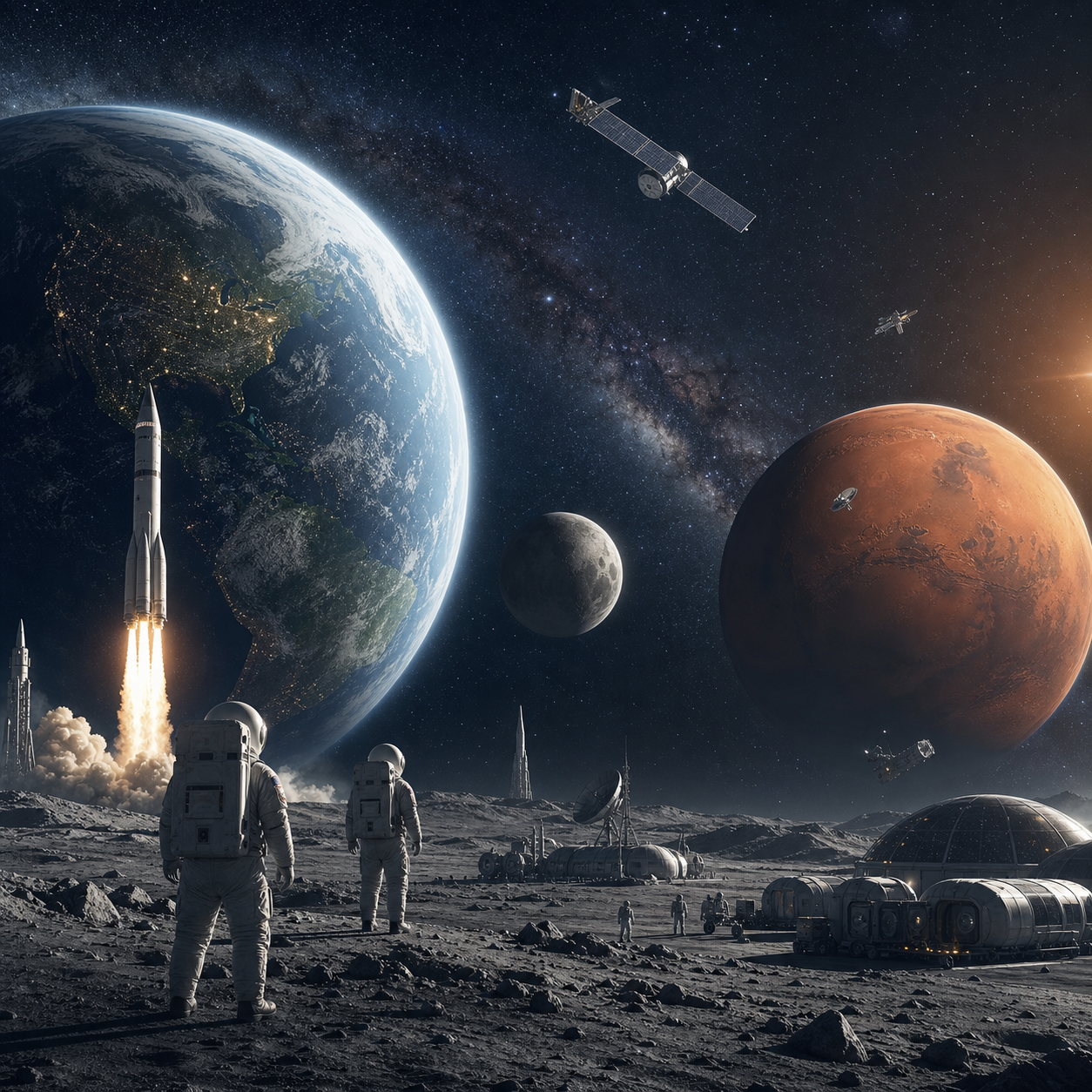
The coming decades may witness the establishment of permanent human presence on the Moon, scientific bases on Mars, and the development of entirely new industries operating in space.
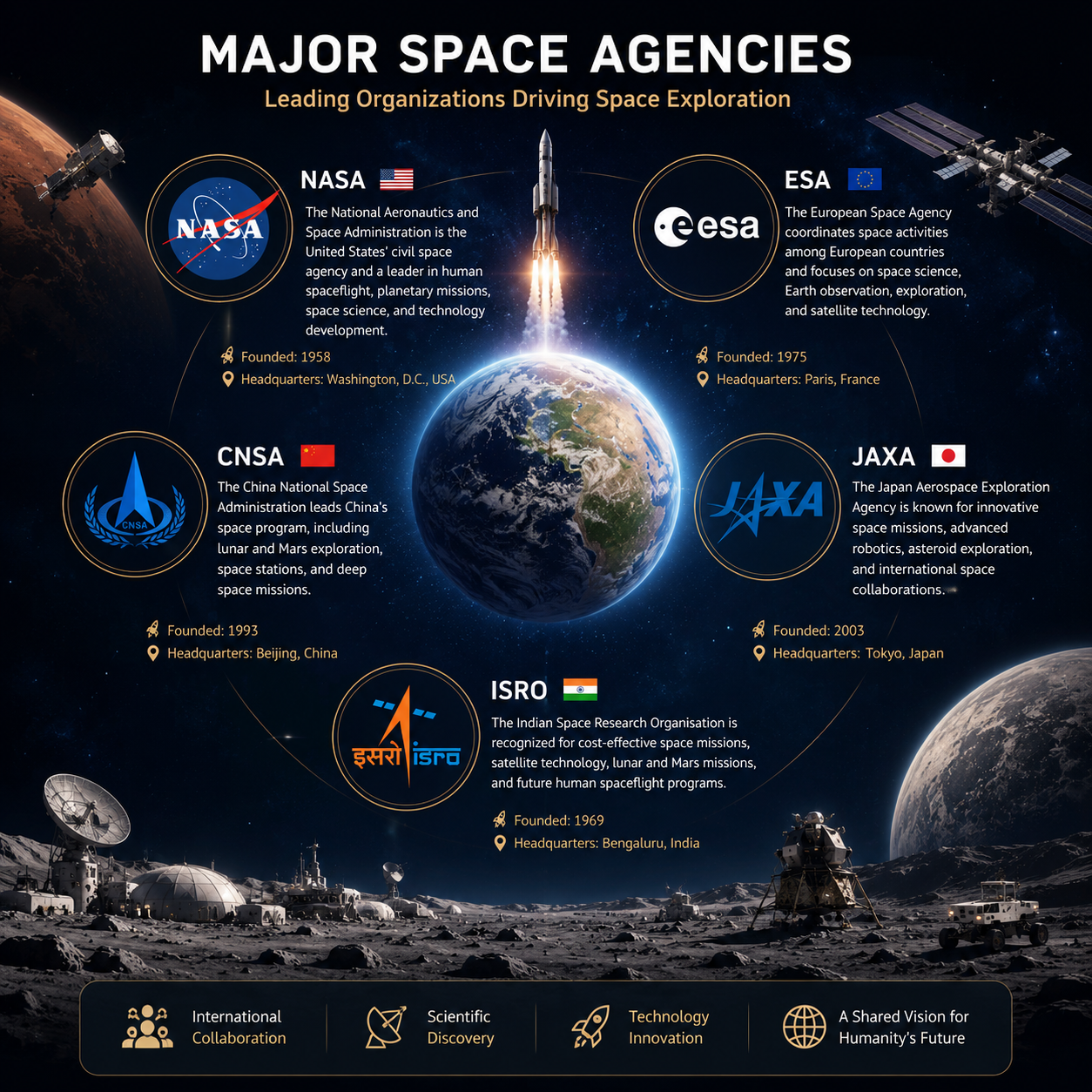
Achieving these goals will require collaboration among scientists, engineers, governments, private companies, and research institutions worldwide.
As humanity moves beyond Earth, new disciplines such as Space Geotechnics, Space Infrastructure Engineering, and Planetary Construction will play increasingly important roles in shaping the future of exploration and settlement.
Explore More
Continue your journey through space engineering and exploration:
Space exploration is no longer a distant vision. It is an emerging reality that will shape the future of science, engineering, and human civilization.
Space Fundamentals
Understanding the Foundations of Space Exploration
Space exploration represents one of humanity's greatest scientific and engineering achievements. From the first satellites orbiting Earth to future plans for permanent settlements on the Moon and Mars, our understanding of space continues to expand at an unprecedented pace.
Space Fundamentals provides an introduction to the key concepts, technologies, and destinations that shape modern space exploration. Whether you are a student, researcher, engineer, or simply curious about the future beyond Earth, understanding these fundamentals is the first step toward exploring the rapidly evolving space sector.
Why Space Exploration Matters
Space exploration drives innovation, expands scientific knowledge, and helps humanity address some of its most complex challenges. Technologies originally developed for space missions have contributed to advancements in communication, navigation, medicine, materials science, and environmental monitoring.
Beyond technological benefits, space exploration helps us understand our place in the universe while preparing humanity for future opportunities beyond Earth.
The Moon: Humanity's Next Destination
The Moon is expected to become the first location for long-term human presence beyond Earth. International programs such as Artemis aim to establish sustainable
lunar operations that will support scientific research, technology development, and future deep-space missions.
The
lunar environment presents unique engineering challenges, including extreme temperatures, radiation exposure, and the need to build infrastructure using local resources.
Learn more:
Mars: The Frontier of Human Settlement
Mars remains the primary long-term target for human settlement beyond Earth. Scientists and engineers are developing technologies that may one day enable humans to live and work on the Red Planet.
Future
Martian settlements will require advanced solutions for construction, transportation, energy production, resource utilization, and environmental protection.
Learn more:
Key Technologies Enabling Space Exploration
Modern space exploration depends on a wide range of technologies, including:
-
Launch vehicles and rockets
-
Satellites and communication systems
-
Robotics and autonomous systems
-
Space habitats
-
Resource utilization technologies
-
Space construction methods
-
Planetary exploration vehicles
-
Advanced materials and manufacturing
These technologies form the foundation of future exploration missions and extraterrestrial infrastructure.
The Future Beyond Earth
The coming decades may witness the establishment of permanent human presence on the Moon, scientific bases on Mars, and the development of entirely new industries operating in space.
Achieving these goals will require collaboration among scientists, engineers, governments, private companies, and research institutions worldwide.
As humanity moves beyond Earth, new disciplines such as Space Geotechnics, Space Infrastructure Engineering, and Planetary Construction will play increasingly important roles in shaping the future of exploration and settlement.
Explore More
Continue your journey through space engineering and exploration:
Space exploration is no longer a distant vision. It is an emerging reality that will shape the future of science, engineering, and human civilization.